Thanks to your support, The Liam Foundation funded a major scientific study whose long-term results have now been published in an international medical journal. Conducted at the Montreal Children’s Hospital (McGill University Health Centre), this research confirms that a promising treatment is both safe and effective at slowing a disease that was, until recently, considered a death sentence.
As Dr. Kenneth Myers, the study’s principal investigator and pediatric neurologist, put it:
“The patients in our cohort are not just alive — they are doing better.” — Dr. Kenneth Myers
That single sentence captures why your generosity matters so deeply.
Understanding POLG-Related Disorders
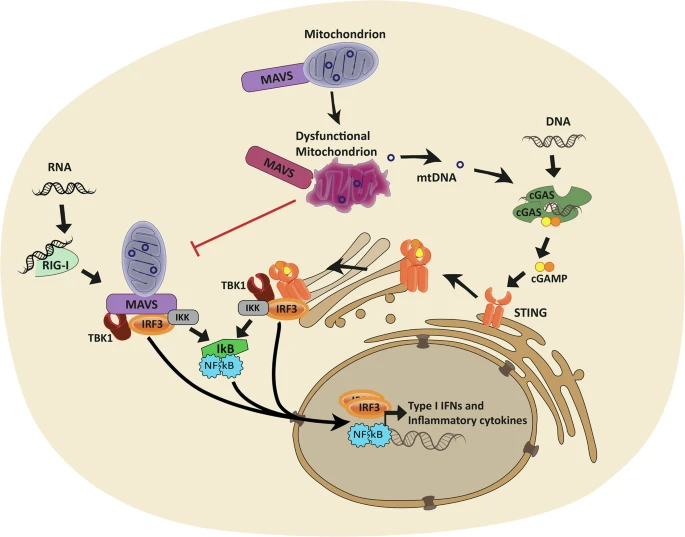
POLG-related disorders are rare, genetic mitochondrial diseases caused by mutations in the POLG gene, which encodes an enzyme essential for replicating and repairing mitochondrial DNA. When this process breaks down, cells can no longer produce the energy the body needs, leading to progressive neurological decline. Symptoms can include seizures (epilepsy), ataxia (loss of balance and coordination), developmental delay and regression, neuropathy, muscle weakness, drooping eyelids (ptosis), and liver dysfunction.
These disorders are sometimes grouped into named syndromes — such as Alpers-Huttenlocher syndrome, ataxia-neuropathy spectrum, and progressive external ophthalmoplegia — but the symptoms often overlap, and many patients don’t fit neatly into a single category. This is exactly the kind of disease that affects Liam, the child whose courage inspired our foundation.
The natural course of these disorders is heartbreaking. Previous research reported a median survival of just 4.9 to 8 months from the onset of symptoms among children with early-onset disease. Until now, there were no approved treatments.
The Treatment Being Studied
The study evaluated a combination therapy made from two natural building blocks of DNA: deoxycytidine (dC) and deoxythymidine (dT). The concept is intuitive — by supplying cells with the building blocks they are missing, the therapy aims to help mitochondria rebuild their DNA and restore energy production. A related approach has already proven successful and received FDA approval for a different mitochondrial condition called TK2 deficiency, which gave researchers a strong scientific rationale to test it here.
The treatment is taken enterally (by mouth or feeding tube), starting at 100 mg/kg/day and gradually increasing to a target of 400 mg/kg/day over three weeks. The trial is officially registered (ClinicalTrials.gov, NCT04802707) and overseen by an independent data safety monitoring board.
Who Took Part in the Study
Twenty-five patients with POLG-related disorders enrolled and began treatment — 14 males and 11 females, with an average age of 12.3 years and a range from 1 to nearly 48 years old. This is significant: earlier results covered only 10 children, while this long-term report includes a larger group and, for the first time, adults with the disease.
19 patients (76%) had symptoms begin before age 12.
4 patients (16%) had onset between ages 12 and 30.
2 patients (8%) had onset after age 30.
Together, the group accumulated 530 months of treatment exposure.
The Results: Numbers That Restore Hope
Measurable Clinical Improvement
On the Newcastle Mitochondrial Disease Scale (NMDS), which measures patients’ clinical status, scores improved significantly at every checkpoint from 1 month all the way to 24 months. The average score dropped from 30.9 at baseline to 18.8 at 24 months — and on this scale, a lower score means a better condition.
An Objective Biomarker Moving in the Right Direction
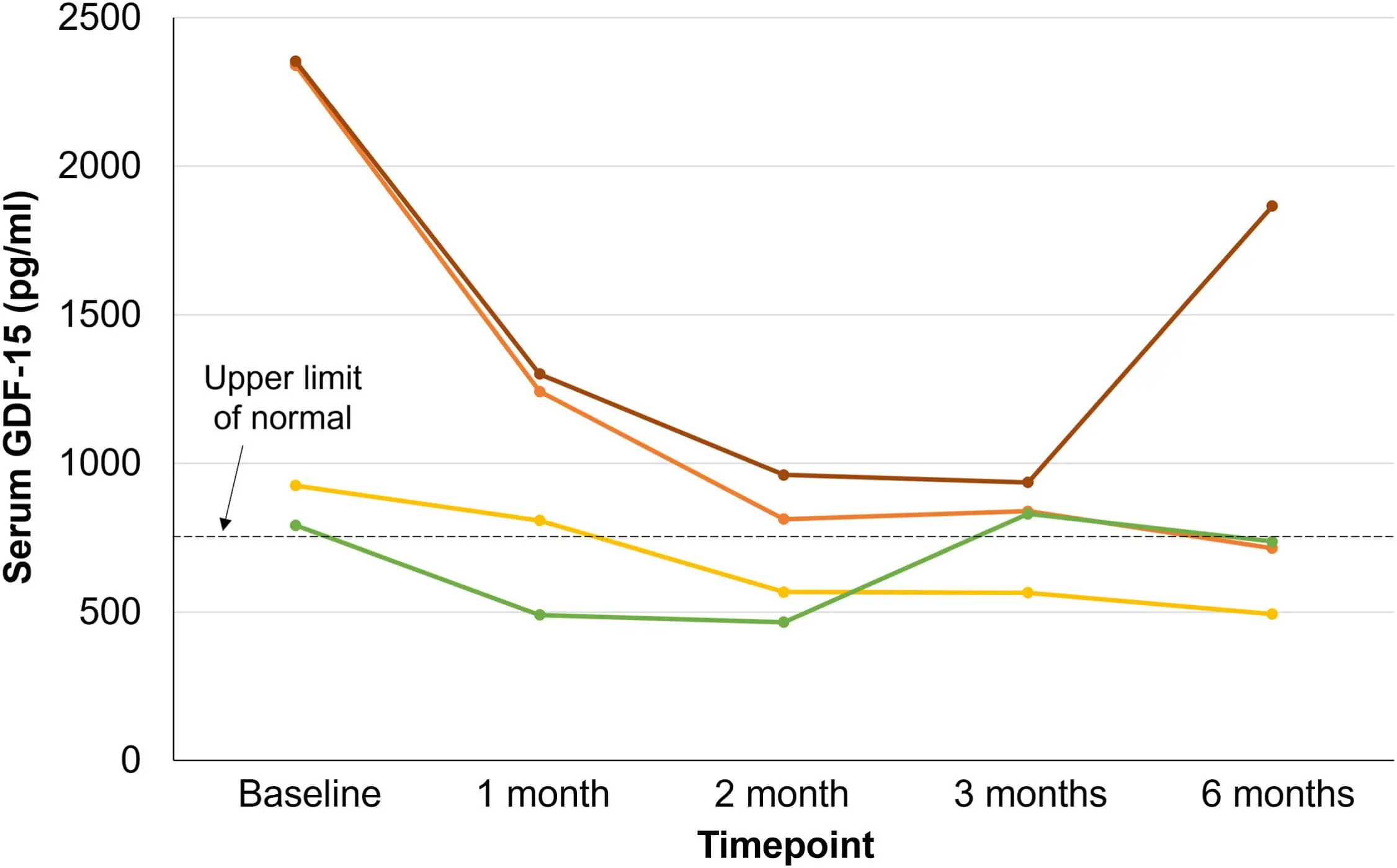
Levels of GDF-15, a blood marker of mitochondrial dysfunction, dropped significantly during the early months of treatment, offering objective biological evidence to support the clinical improvements.
Better Quality of Life
When quality-of-life data from children and adults were combined into a normalized score, significant improvements appeared at the 3-, 12-, and 18-month marks. Among adult patients specifically, quality-of-life scores improved significantly as early as one month.
Fewer Seizures
Among patients who had uncontrolled seizures when they enrolled, 71% (10 of 14) experienced more than a 50% improvement in their seizures, and three became seizure-free. Importantly, none of the patients with prior seizures saw them worsen, and none of the eight patients without a seizure history developed seizures during the trial.
The Most Important Outcome: Lives Extended
This is where the data become truly remarkable. Based on the known natural history of the disease, researchers would have expected more than half of the early-onset children to die within the first year. Instead, only 2 of 19 early-onset patients (11%) died during that first year, and 4 of 19 (21%) died over the entire observation period.
While researchers rightly caution that comparisons with historical data must be interpreted carefully, this is the strongest signal yet that the treatment may be changing the course of the disease itself. It is the difference between counting months and counting years.
A Treatment That Proved Safe
Across 530 cumulative months of treatment, no serious adverse effects were attributed to the therapy. The most common side effect was diarrhea, which was either temporary or easily managed by slightly reducing the dose. A few adult patients experienced some unintentional weight gain, and routine blood and urine testing revealed no concerning changes to liver, kidney, or muscle function.
The researchers are transparent about the difficult realities too: five patients passed away during the trial, but in each documented case the deaths were linked to the severe underlying disease, infections, or complications — not to the treatment itself.
What This Means for the Future
The research team is honest about the study’s limitations. Because this was an open-label trial without a control group, the ideal next step would be a randomized controlled trial to confirm the findings with even greater certainty. Further research will also help clarify exactly how the treatment works at the cellular level, so it can be refined and optimized for every patient.
In the words of the authors, the data “suggest deoxycytidine/deoxythymidine is safe and effective for POLG-related disorders” — a sentence that, just a few years ago, no one could have written.
This study was funded primarily by The Liam Foundation, with additional support from the Savoy Foundation, the Grand Défi Pierre Lavoie Foundation, the Montreal Children’s Hospital Foundation, and the Fonds de Recherche du Québec – Santé, among other valued partners. The study was approved by the McGill University Health Centre Research Ethics Board, with a no-objection letter from Health Canada.
Every donation, every act of support, and every share contributes directly to turning hope into real results — for children like Liam, and for families around the world facing this disease. What began as one family’s refusal to give up has become published science that is already extending and improving lives.
Together, we are writing a new story for mitochondrial disease. 💙
Discover the official medical article here 👉 Click Here